wargameitaliablog

wargameitaliablog
Blog italiani di gioco, pittura, storia... wargames

Visualizzazioni totali

Lettori fissi

lunedì 15 settembre 2014

27th Dutch Jäger Battalion, 1815

27th Dutch Jaeger Battalion.

27th Dutch Jaeger Battalion.

There where six regiments of jägers in the Netherlands Army; they wore uniforms of a similar cut to those of the line infantry, but in the distinguishing colours of green with yellow facings as befitted a light infantry corps.
The Dutch regiments wore the bell-topped shako with green plume for centre companies, green tipped red for flank company and green tipped yellow for light company.
The 27th Dutch Jäger Battalion was part of Bijlandt Brigade, in the 2nd (Dutch-Belgian) Division of Lieutenant General Perponcher.
In the morning of june 16, 1815 Perponcher had covered his entire front at Quatre-Bras with the 27th Jäger in a thin skirmishing line that stretched for almost a mile.
The Dutch-Belgian men suffered greatly from the severe fire of the French artillery and skirmishers, supported by awesome columns. The remaining Jägers took positions along the dense hedges near the creek that ran across the field. Covering the French infantry attack, the 6th Chasseurs à cheval fell upon the 27th Jägers so unexpectedly that Lieutenant Colonel Grunebosch was unable to deploy his unit (the Jägers) into square formation to receive them. Ridden down, the battalion were chased in all directions; by the end of the day they would have suffered 32 % casualties.
My 27th Dutch Jäger Battalion is made up of 16 figures (8 Fusiliers, 4 Flaquers, 4 Light Infantry).
Figures by Front Rank.
Painted by Luca Onesti (Strategia Nova).
   
C’erano sei reggimenti di jäger (cacciatori) nell’esercito dei Paesi Bassi; indossavano uniformi di un taglio simile a quello della fanteria di linea, ma con il colore distintivo verde con mostreggiature gialle come si conveniva a un corpo di fanteria leggera.
I reggimenti olandesi indossavano lo shako svasato l’alto, con un pennacchio verde per le compagnie centrali, verde sormontato di rosso per la compagnia di elite e verde sormontato di giallo per la compagnia leggera.
Il 27° Battaglione Jäger olandese era parte della Brigata Bijlandt, nella 2° Divisione (belga-olandese) del tenente generale Perponcher.
Al mattino del 16 giugno 1815, Perponcher aveva coperto il suo intero fronte a Quatre-Bras con il 27° Jäger in una sottile linea di schrmagliatori che si estendeva per quasi un miglio.
Gli uomini belgi-olandesi soffrirono molto per il severo fuoco dell’artiglieria francese e degli schermagliatori nemici, supportati da impressionanti colonne di fanteria. Gli jäger rimanenti presero posizione lungo le fitte siepi che costeggiavano il torrente che attraversava il campo di battaglia.
Per coprire l’attacco della fanteria francese, il 6° Cacciatori a cavallo caricò il 27° Jäger in modo così improvviso e inaspettato che il tenente colonnello Grunebosch non riuscì a schierare la sua unità (gli jäger) nella formazione a quadrato per riceverli. Colpito duramente, il battaglione fu respinto in tutte le direzioni; entro la fine della giornata avrebbe subito il 32% di perdite.
Il mio 27° Battaglione di Jäger olandese è composto di 16 figure (8 fucilieri, 4 “Flanquers”, 4 fanti leggeri).
Miniature della Front Rank.
Dipinti da Luca Onesti (Strategia Nova).
  

27th Dutch Jaeger Battalion.

Command party.

Command party.

Light Infantry company.

Flaquers company.

27th Jaeger in skirmish.

Flag of the 27th Jaeger.

Flag of the 27th Jaeger (recto).

Flag of the 27th Jaeger (verso).

Dutch-Belgian Jaegers (by P. Courcelle).

Officer of 16th Jaeger.

Coat of Jaegers.

Light company private of Jaegers.

lunedì 1 settembre 2014

In the library: WWI, Murat & ACW.

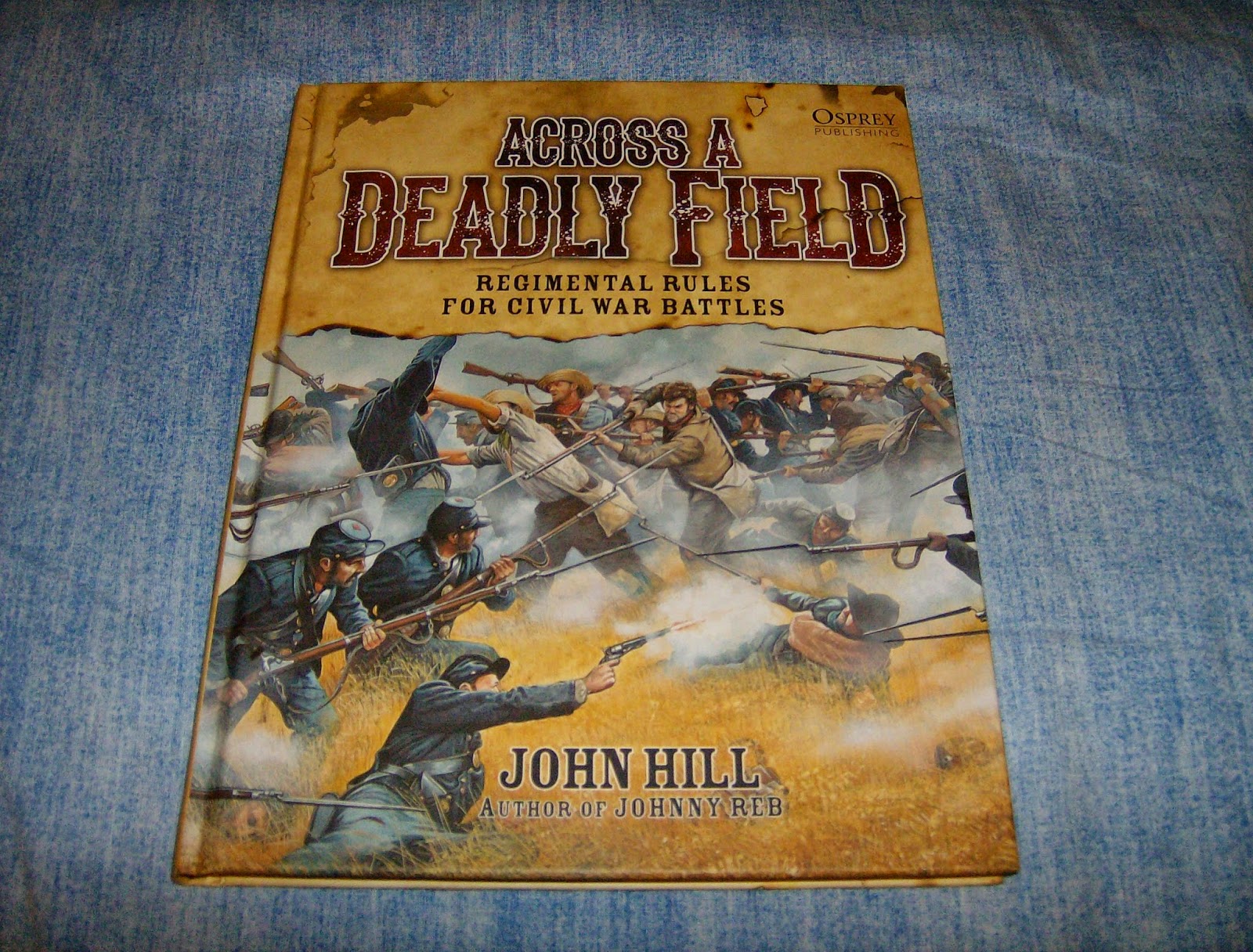
Across a Deadly Field, by John Hill.

These below are some of the books I've bought recently and recommend it highly to anyone interested in the history and wargame:
"Catastrophe 1914 - Europe goes to war" by Max Hastings (795 pages).
An unrivaled and exciting description of the first terrible year of the great war 14/18 (from the attack in Sarajevo to the Christmas truce).
The Austro-Hungarian army and the British general French do not make us a great figure.
"The army of the kingdom of Naples (1806-15) Vol. 1: Infantry" by Luca Cristini and Claudio Fernandez (79 pages).
Overview concise but comprehensive line infantry, light and Guard Murat. Contains 16 color illustrations of soldiers in uniform (captions and comments to the tables in English).
"Across a Deadly Field - Regimental Rules for Civil War Battles" wargame rules by John Hill (144 pages).
New rules of the Osprey Publishing in the English language to replay the American Civil War regimental level.
Sounds interesting and allows you to deploy individual regiments formed from 4, 6 or 12 figures in 10, 15 or 28 mm.


Questi di seguito, sono alcuni dei libri che ho acquistato recentemente e che raccomando fortemente a chiunque sia interessato alla storia e al wargame:
“Catastrofe 1914 - l'Europa in guerra di Max Hastings (795 pagine).
Descrive in modo impareggiabile ed appassionante, il primo terribile anno della grande guerra 14/18 (dall’attentato di Sarajevo alla tregua di Natale).
L’esercito austro-ungarico e il generale britannico French non ci fanno una gran figura.
“L’esercito del regno di Napoli (1806-15) Vol. 1: la fanteria” di Luca Cristini e Claudio Fernandez (79 pagine).
Panoramica sintetica, ma completa sulla fanteria di linea, leggera e della Guardia di Murat. Contiene 16 illustrazioni a colori di soldati in uniforme (didascalie e commento alle tavole anche in lingua inglese).
“Across a Deadly Field – Regimental Rules for Civil War Battles” regole di wargame di John Hill (144 pagine).
Nuove regole della Osprey Publishing in lingua inglese per rigiocare la guerra civile americana a livello reggimentale.
Sembra interessante e consente di schierare singoli reggimenti formati da 4, 6 o 12 figure in 10, 15 o 28 mm.


Book by Max Hastings, English version.

Book by Max Hastings, Italian version.

Book by Max Hastings, Italian version.

Book about the Neapolitan Napoleonic army.

Book about the Neapolitan Napoleonic army.

Book about the Neapolitan Napoleonic army.

John Hill's Rules Book.

domenica 31 agosto 2014

New wargame table top

Shelf above the Ikea table, without drawers in the center.
Ripiano sopra il tavolo di Ikea, senza i cassetti al centro.
Finally today I own my wargame table!
Yesterday I bought a table "Norden" from Ikea and today I installed, it was tiring, but it's worth it.
I'm going to use the table "Norden" as a support for a table top of wood 120 x 180 cm (4 x 6 Feet) to play the wargame with the figurines.
Between the Ikea table and the wood table top I placed a special "anti-slip cloth" in order not to scratch the table and give it more stability.
The table can be folded into three parts, occupying very little space.
The table top is divided into two equal parts of 90 x 120 cm (3 x 4 Feet) joined together by a metal hinge, which allows it to be folded in two, carry it and store it with less difficulty.
Of course to play the game table top will be covered by a battle mat by Citadel to simulate the grassy ground.
The idea I had it for some time, I finally put into practice now remains the problem of where to put everything, the house is small!

Finalmente da oggi possiedo il mio tavolo da wargame!
Ieri ho acquistato un tavolo Norden da Ikea e oggi l’ho montato, è stato faticoso, ma ne vale la pena.
Ho intenzione di usare il tavolo Norden come supporto per un ripiano di legno di cm 120 x 180 (4 x 6 Feet) per giocare a wargame tridimensionale.
Tra il tavolo Ikea e il ripiano ho posizionato uno speciale “panno antiscivolo” per non graffiare il tavolo e dare più stabilità.
Il tavolo può essere ripiegato in tre parti, occupando davvero poco spazio.
Il ripiano è diviso in due parti uguali di cm 90 x 120 (3 x 4 Feet) unite tra loro da una cerniera metallica, il che consente di ripiegarlo in due, trasportarlo e riporlo con minori difficoltà.
Naturalmente per giocare il piano di gioco sarà coperto da un tappeto da gioco della Citadel per simulare il terreno erboso.
L’idea ce l’avevo da tempo, finalmente l’ho messa in pratica ora rimane il problema di dove riporre il tutto, la casa è piccola!


Folding table Ikea solid wood.
Tavolo pieghevole di Ikea in legno massiccio.

Anti-slip cloth on the folding table. 
Panno anti scivolo sul tavolo pieghevole.

Anti-slip cloth on the folding table. 
Panno anti scivolo sul tavolo pieghevole.

Shelf for the wargame superimposed on the folding table Ikea (the central drawers have been removed). Ripiano per il wargame sovrapposto al tavolo pieghevole Ikea (i cassetti centrali sono stati tolti).

The house is small!
La casa è piccola!

sabato 30 agosto 2014

Wellington & his Staff, 1815

The Duke of Wellington encouraging the Hanoverian Landwher.
Duke of Wellington and his Staff.
Lord Hill, the Duke of Wellington and General Picton.
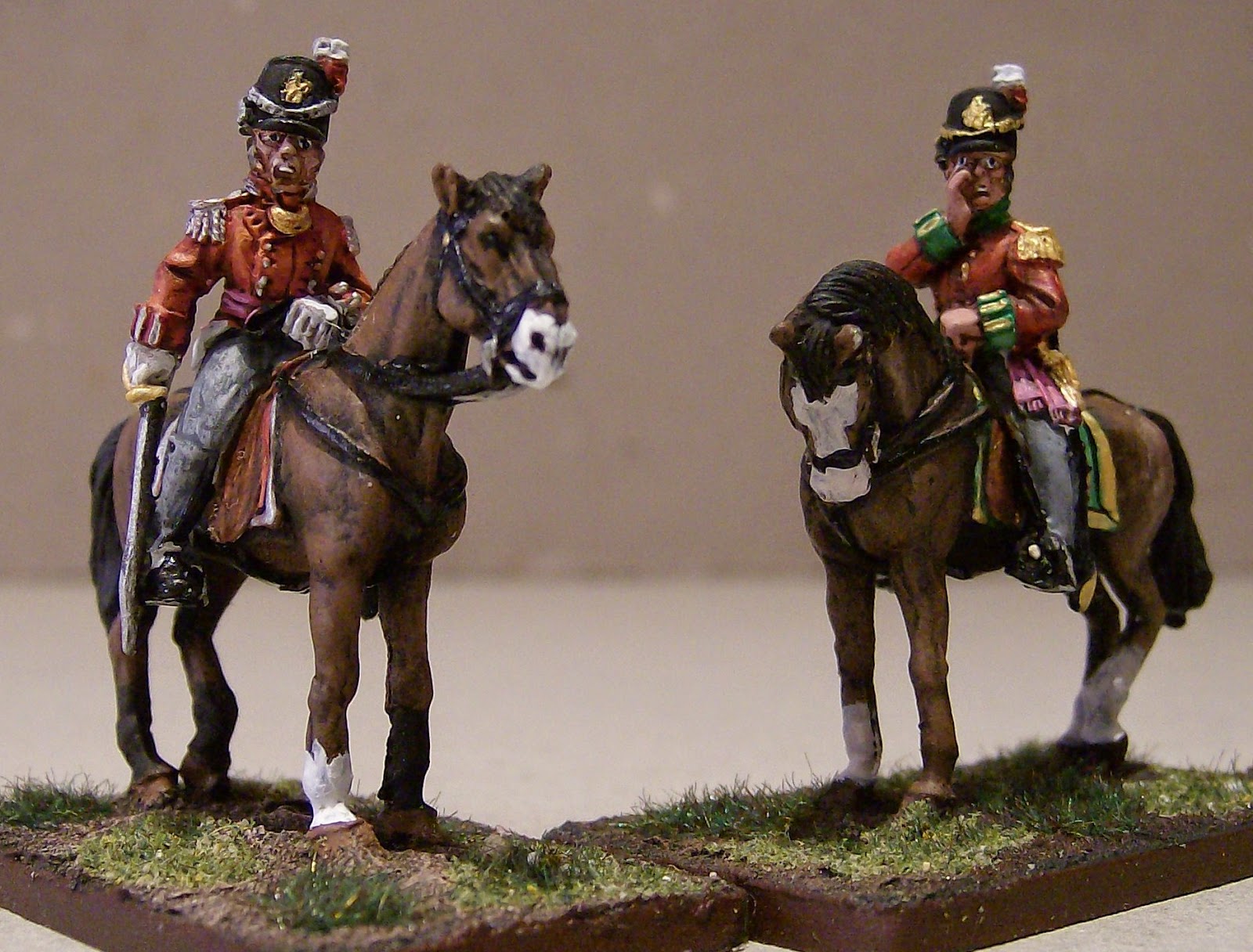
Lieutenant-Colonels W. G. K. Elphinstone and C. Morice.
Arthur Wellesley, 1st Duke of Wellington was the same age of Napoleon. Born with the family name of Wellesley, he was the third son of an Anglo-Irish peer. After an indifferent schooling at Eaton, he more or less drifted into the army. In 1794 he was in command of the 33rd Foot and distinguished himself in the Flanders campaign. Later he was in India, where he reached the rank of Major-General and won the war Maharatta.
It was in Spain and Portugal that he really made his name, working with Britain’s Iberian allies to develop an army that gradually cleared the peninsula of French troops and entered in France itself.
When the armistice was signed in 1814, the Duke of Wellington had not faced an army led by Napoleon himself. Only in 1815, are the two great generals were destined to meet on the battlefield.
General Rowland Hill was not present at Quatre-Bras, but at Waterloo commanded the II Corps. He led the famous charge of Adam’s brigade against the Imperial Guard.
Sir Thomas Picton was in command of the 5th Infantry Division. He was severely wounded at Quatre-Bras, but retained command of his troop. At Waterloo fought with valour against Comte D’Erlon’s I Corps, but was mortally shot through the temple by a musket ball and.
Lieutenant-Colonel W. G. K. Elphinstone was in command of 33rd Foot. Lieutenant-Colonel C. Morice was in command of 69th Foot. Both wore the infantry dress with regimental distinctions.
It was not unusual for British staff officers to wear civilian dress.
During the campaign of Waterloo, Wellington wore a simple blue tunic, with a black cocked hat and a cloak of the same colour.  Lord Hill wore an old boat cloak.
Lieutenant General Picton habitually wore a shabby greatcoat and battered beaver hat, and arrived at the fields of Quatre-Bras and Waterloo carrying an umbrella.
I intend to use the figures of Hill and mounted Colonels as division commanders.
Figures of Victix Miniatures.
Painted by Luca Onesti (Strategia Nova).


Arthur Wellesley, primo duca di Wellington aveva la stessa età di Napoleone. Nato con il nome di famiglia di Wellesley, era il terzo figlio di un pari anglo-irlandese. Dopo una scuola mediocre a Eaton, entrò nell'esercito. Nel 1794 era al comando del 33° Fanteria e si è distinto nella campagna delle Fiandre. Più tardi è stato in India, dove ha raggiunto il grado di maggiore generale e vinto la guerra Maharatta.
È stato in Spagna e in Portogallo che in realtà ha raggiunto la fama, lavorando con gli alleati iberici della Gran Bretagna per sviluppare un esercito che ha gradualmente eliminato la penisola dalle truppe francesi ed è entrato nella stessa Francia.
Quando l'armistizio fu firmato nel 1814, il Duca di Wellington non aveva ancora affrontato un esercito guidato dallo stesso Napoleone. Solo nel 1815, i due grandi generali erano destinati a incontrarsi sul campo di battaglia.
Il generale Rowland Hill non è stato presente a Quatre-Bras, ma a Waterloo ha comandato il II Corpo d'Armata. Ha guidato la famosa carica della brigata Adam contro la Guardia Imperiale.
Sir Thomas Picton era al comando della 5° Divisione di Fanteria. Egli è stato gravemente ferito a Quatre-Bras, ma ha mantenuto il comando delle sue truppe.
A Waterloo ha combattuto con coraggio contro I corpo del conte D’Erlon, ma è stato mortalmente colpito alla tempia da una palla di moschetto.
Il tenente colonnello W. G. K. Elphinstone era al comando della 33° Fanteria. Il tenente colonnello C. Morice era al comando della 69° Fanteria. Entrambi indossavano la tenuta della fanteria con le distinzioni reggimentali.
Non era insolito per ufficiali di stato maggiore britannici di indossare abiti civili.
Durante la campagna di Waterloo, Wellington indossava una semplice tunica blu, con un bicorno nero e un mantello dello stesso colore. Lord Hill indossava un vecchio mantello da marinaio.
Il tenente generale Picton abitualmente indossava un cappotto malandato e cappello di castoro malconcio, e arrivò sui campi di Quatre-Bras e Waterloo impugnando un ombrello.
Ho intenzione di utilizzare le figure di Hill e dei colonnelli a cavallo come comandanti di divisione.
Figures della Victix Miniatures.
Dipinti da Luca Onesti (Strategia Nova).

The Duke of Wellington.

The Duke of Wellington.

Lord Rowland Hill.

Lord Rowland Hill.

Sir Thomas Picton.

Sir Thomas Picton.

Lt.-Colonel W. G. K. Elphinstone.

Lt.-Colonel C. Morice.

The Duke of Wellington.

The Duke of Wellington.

Lord Rowland Hill.

Sir Thomas Picton.

Lt.-Colonel W. G. K. Elphinstone.

General Wellington.

General Hill

General Picton